Does a Robot Perform Robotic Knee Replacement? The Truth Explained
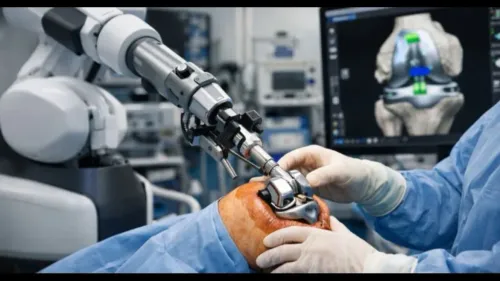
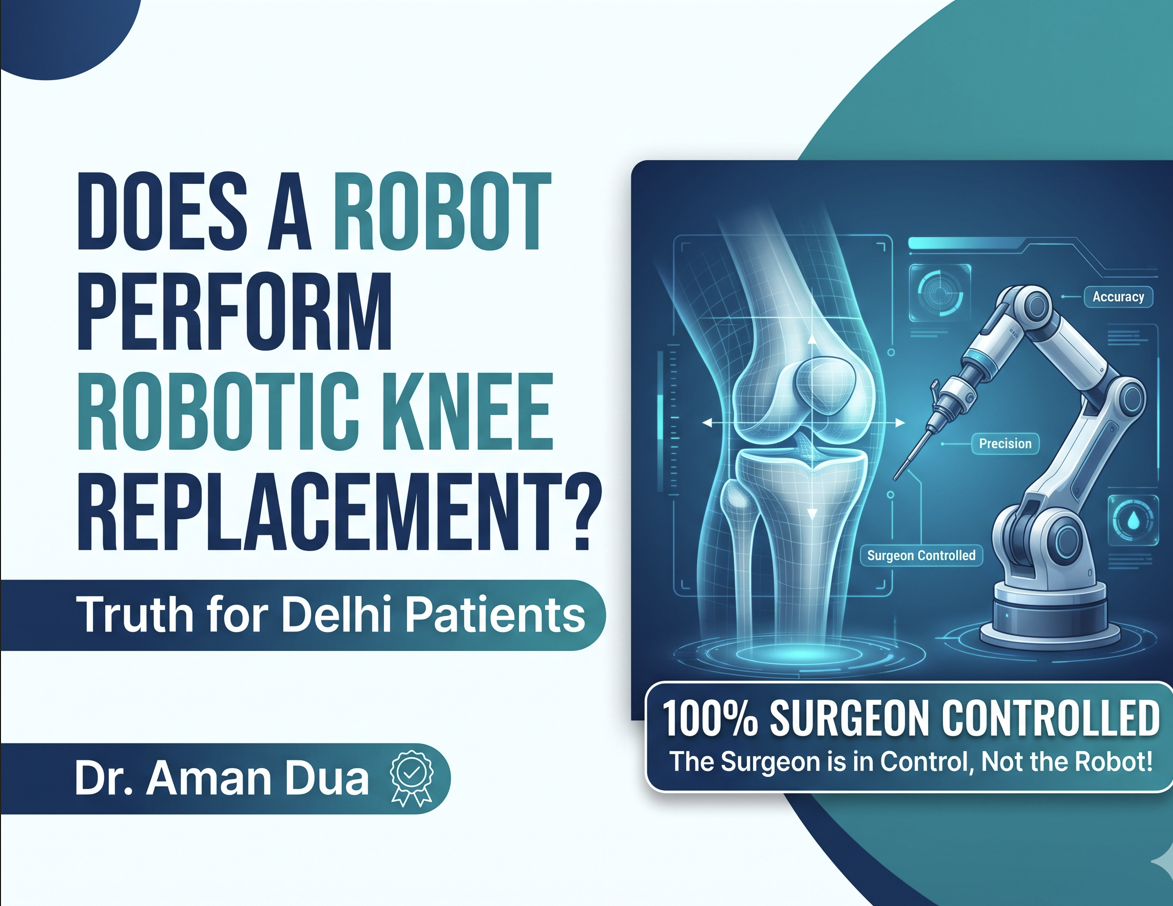
No—a robot does not perform robotic knee replacement on its own. The surgery is still performed by an experienced orthopedic surgeon; robotic technology assists the surgeon with planning, accuracy, and precision during the procedure.
Many patients hear the term “robotic knee replacement” and imagine a machine operating independently. In reality, the robot is a sophisticated surgical assistant. The surgeon remains in control at every stage.
What is robotic knee replacement?
Robotic knee replacement, also called robotic-assisted knee replacement, uses computer-assisted technology to help the surgeon plan and execute the procedure with greater accuracy.
Before and during surgery, the system creates a detailed understanding of the patient’s knee anatomy, alignment, and movement. The surgeon then uses this information to guide bone preparation and implant positioning.
The robot does not make medical decisions, choose the implant, or move independently. It assists the surgeon by providing real-time feedback and helping maintain the planned surgical boundaries.
What does the surgeon do?
The surgeon performs the critical parts of the operation, including:
- Assessing whether knee replacement is appropriate.
- Selecting the suitable implant and surgical approach.
- Making the incision and accessing the knee joint.
- Removing damaged bone and cartilage.
- Balancing the soft tissues around the knee.
- Positioning and securing the implant.
- Checking knee alignment, stability, and movement.
- Managing safety, complications, and post-operative care.
Robotic technology supports these steps; it does not replace surgical judgment or hands-on expertise.
How does the robot assist the surgeon?
A robotic knee replacement system typically helps in three main ways:
1. Pre-operative planning
The system helps the surgeon assess the knee’s shape, alignment, and deformity. This allows a more personalised surgical plan based on the patient’s anatomy.
2. Intra-operative guidance
During surgery, the system provides real-time information about bone preparation, implant position, and limb alignment. The surgeon can make adjustments based on this feedback.
3. Precision and control
The robotic system helps the surgeon stay within the planned boundaries while preparing the bone. This can support more accurate implant placement and alignment.
Does robotic knee replacement mean better results for everyone?
Robotic assistance may help improve accuracy in implant positioning and alignment. However, better technology does not automatically guarantee a better outcome for every patient.
The final result depends on several factors:
- Severity of arthritis and knee deformity.
- Bone quality and anatomy.
- Patient age, weight, and overall health.
- Surgical planning and technique.
- Implant selection.
- Soft-tissue balance during surgery.
- Post-operative rehabilitation and follow-up.
- Management of medical conditions such as diabetes or heart disease.
A skilled surgeon using conventional techniques can achieve excellent outcomes. Robotic assistance is one tool that may support precision, but it is not a substitute for experience and careful patient selection.
Is robotic knee replacement painful?
The robotic system itself does not make the surgery painless. As with conventional knee replacement, patients may experience pain, swelling, and stiffness after the operation.
However, pain is usually managed with a planned protocol involving anaesthesia, medicines, ice, early mobilisation, and follow-up care. The goal is to keep discomfort controlled so the patient can safely begin moving and recovering.
What are the possible benefits of robotic knee replacement?
For suitable patients, robotic-assisted knee replacement may offer:
- More personalised surgical planning.
- Improved accuracy in implant positioning.
- Better assessment of limb alignment.
- Real-time feedback during bone preparation.
- Potential support in preserving healthy bone and soft tissue.
- Greater confidence in achieving the planned surgical goals.
These benefits can be valuable, but they should always be discussed in the context of the individual patient’s knee condition and overall health.
Are there limitations or risks?
Robotic knee replacement is still a major surgery and carries risks similar to conventional knee replacement. These may include infection, blood clots, stiffness, implant-related issues, nerve or blood-vessel injury, anaesthesia-related risks, and the need for revision surgery in some cases.
Robotic technology may also not be necessary or suitable for every patient. The decision should be based on a full clinical assessment, X-rays, medical history, and a discussion of the patient’s goals—not simply on the availability of a robot.
Robotic vs conventional knee replacement
 Who may be a candidate for robotic knee replacement?
Robotic knee replacement may be considered for patients with advanced knee arthritis, significant pain, stiffness, deformity, or reduced mobility when non-surgical treatment is no longer sufficient.
A consultation with an orthopedic surgeon helps determine:
- Whether knee replacement is needed.
- Whether robotic assistance is appropriate.
- Which implant and surgical approach may suit the patient.
- What recovery and follow-up will involve.
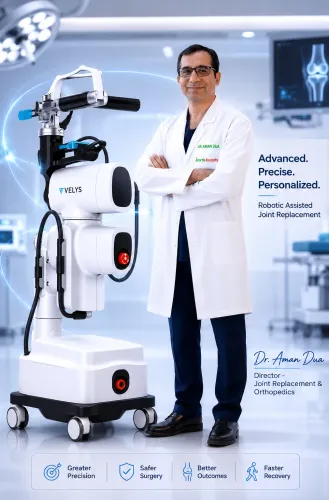
Why consult Dr. Aman Dua?
Choosing knee replacement is a major decision. It requires careful evaluation of symptoms, X-rays, walking ability, medical history, and expectations—not just a decision based on technology.
Dr. Aman Dua is an orthopedic surgeon specialising in joint replacement, with M.S. Orthopedics from AIIMS, New Delhi, D.N.B. Orthopedics, and 23 years of experience. His practice, Centre For Joint Diseases, focuses on knee arthritis, joint replacement, and related orthopedic care in Delhi.[fasttrackkneereplacement]
Book a consultation in Delhi
If you are considering robotic knee replacement or want a second opinion about persistent knee pain, schedule an assessment with Dr. Aman Dua.
Dr. Aman Dua
Centre For Joint Diseases
Fortis Escorts Hospital, Okhla Road, Near Sukhdev Vihar Metro Station, Delhi 110025
Phone: +91 9625440750
Hospital contact: +91-8750005633
Timings: Monday–Saturday, 10:00 AM–4:00 PM
Website: https://www.fasttrackkneereplacement.com/[fasttrackkneereplacement]
FAQs
Does a robot perform the entire knee replacement?
No. The surgeon performs the surgery. Robotic technology assists with planning, measurements, alignment, and precision during the procedure.
Is robotic knee replacement safer than conventional surgery?
Robotic assistance may improve precision in selected cases, but it does not remove surgical risks. Safety depends on patient selection, surgical expertise, planning, and post-operative care.
Is robotic knee replacement painless?
No surgery is painless. Robotic knee replacement can still involve post-operative pain, swelling, and stiffness, which are managed through a structured recovery plan.
Is robotic knee replacement right for every patient?
Not necessarily. The suitability of robotic assistance depends on the patient’s knee condition, deformity, bone quality, medical history, and the surgeon’s assessment.
How do I know if I need knee replacement?
A knee replacement surgeon evaluates your pain, mobility, X-rays, response to non-surgical treatment, and impact on daily life before recommending surgery.
Keywords